Deconstructing Denim: Margiela S/S ‘91 and Beyond
Professor of Visual Imagery at Polimoda, writer, and journalist Karlo Steel traces the trend for denim reconstruction from 1991 to today.

The opening look of Martin Margiela’s fifth show, Spring/Summer 1991, was a sleeveless denim coat. Assembled from a denim jacket and a pair of jeans, both vintage, its top had been whittled away to a vest. Attached at its hem, a pair of jeans were opened in front, the back filled in with additional vintage denim. It was an adaptation of a style of patchwork skirt which surfaced at the end of the Sixties. With rose petals in her hair and patchouli on her skin, Paula Gerardi, his first muse, strolled through the crowd gathered at a disused parking garage in Paris’ 9th arrondissement. Long, lean, elegant and rough, the coat placed Margiela’s talent for upcycling, particularly with denim, front and center. The coat would be the cornerstone of the many denim iterations the brand would explore, from licks of paint to an exploded size IT 72.
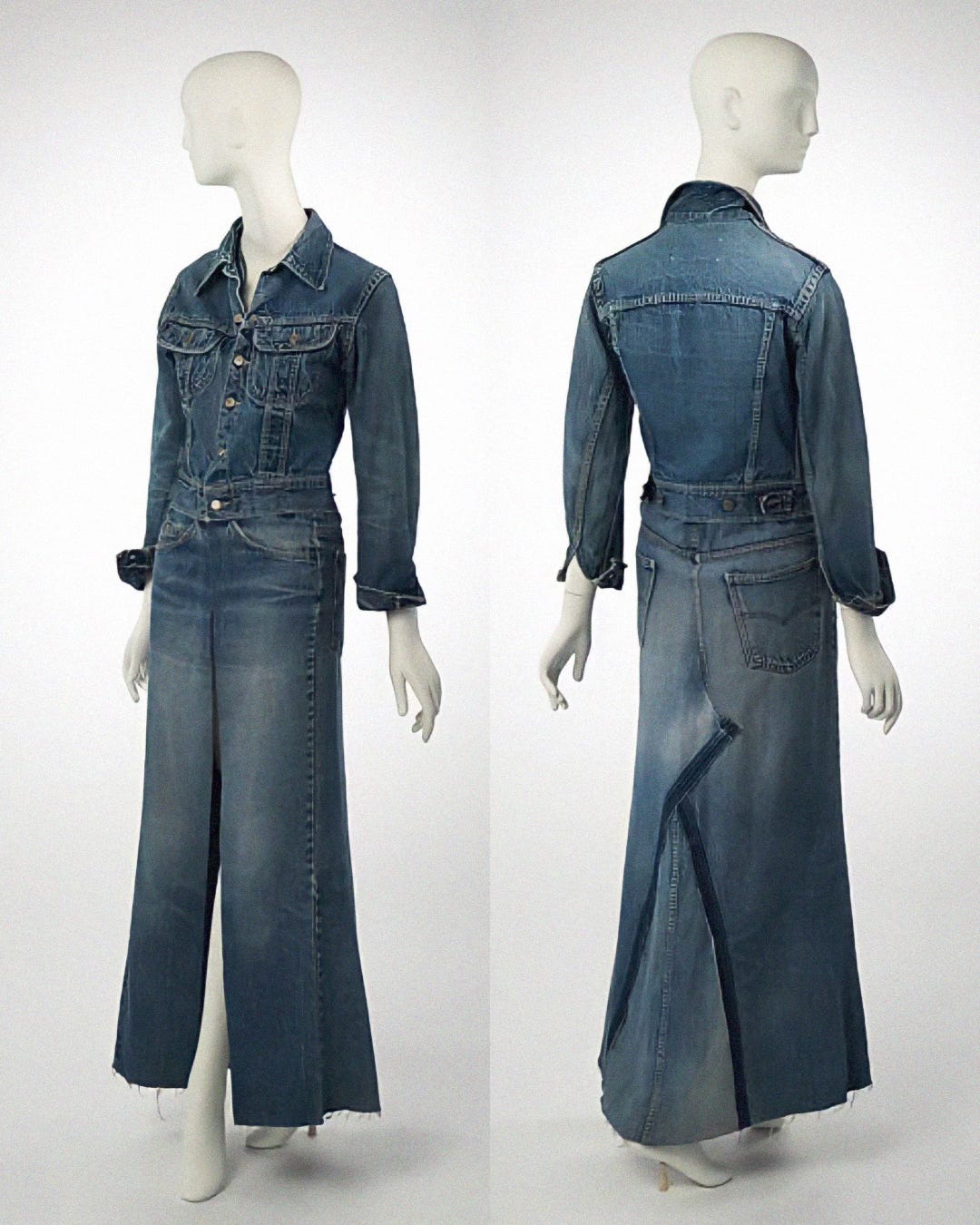
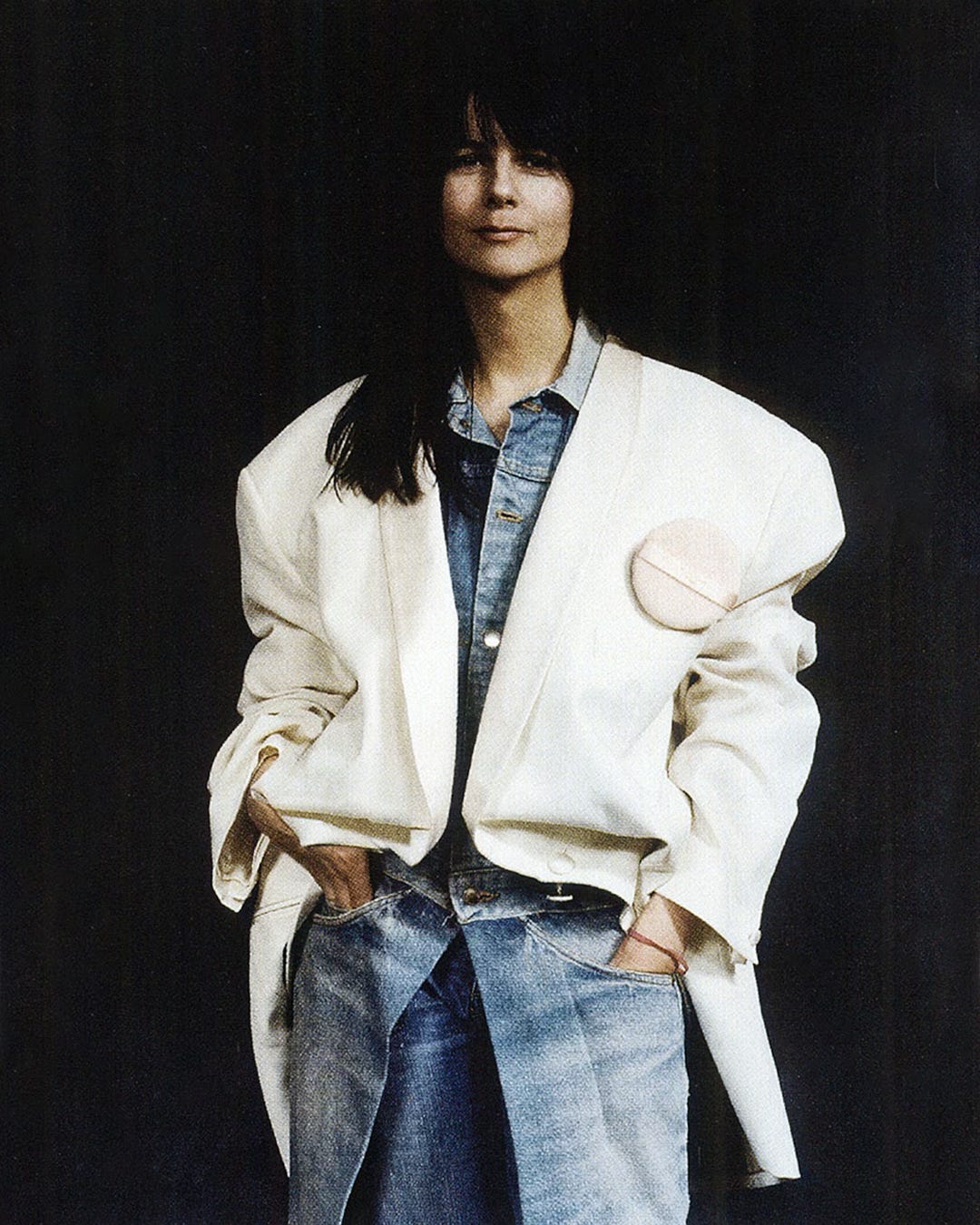
There are two versions of the coat, the sleeveless one, and one with a full denim jacket. For the latter, Margiela nipped the waist and darted the elbows, bringing it closer to the body. It was not his first time using denim, nor his first with vintage. But by opening a show with a garment made from vintage denim, its prominence signaled he was au fait with the growing interest in old denim, its multi-hued indigo shades being difficult to convincingly achieve via industrialization. By the mid Eighties, Levi’s Big E’s and red line selvedge jeans were commanding hefty prices, especially in Japan. Having the “perfect pair” was de rigueur for any with-it trendy by 1989.
Although denim had been invented in 17th century France, hard wearing jeans were taken from America’s farmland and donned by city bobbysoxers in the 1940s. They acquired a more rebellious connotation when Marlon Brando struck a hot and heavy pose in black leather on a motorbike in the 1950s, a look which dove tailed with the sweaty stirrings of early Rock and Roll. Faded flares, their hems chewed up from muddy festivals, meant you had hippie kudos by 1968. In the Seventies, they meant sex. Diana Ross and Cher, fitted to a T in 501s, fans blowing at Scavullo’s studio, the gay clones of San Francisco and New York leaving their button fly partially undone, and UK punks brutally upending the decade’s start of patch and mend with slash and destroy aesthetics leaving glimpses of skinny legs on view.
By the 1980s, a pair of well worn jeans were an indispensable garment of style, chic with red lips and heels, Brooke Shields striking awkwardly suggestive poses while cooing about her Calvin’s on TV (Calvin Klein was first to show jeans on the catwalk in 1976). Later in the decade, the smiley faces and rainbow appliqués of the early Seventies returned to denim, propelled by the chemical highs of Acid House and fashion’s penchant for resurrecting the styles of twenty years prior. And that’s where Margiela came in, bang on time with a brand new/retro look, the denim of yesterday refashioned for today. The patchouli said it all.
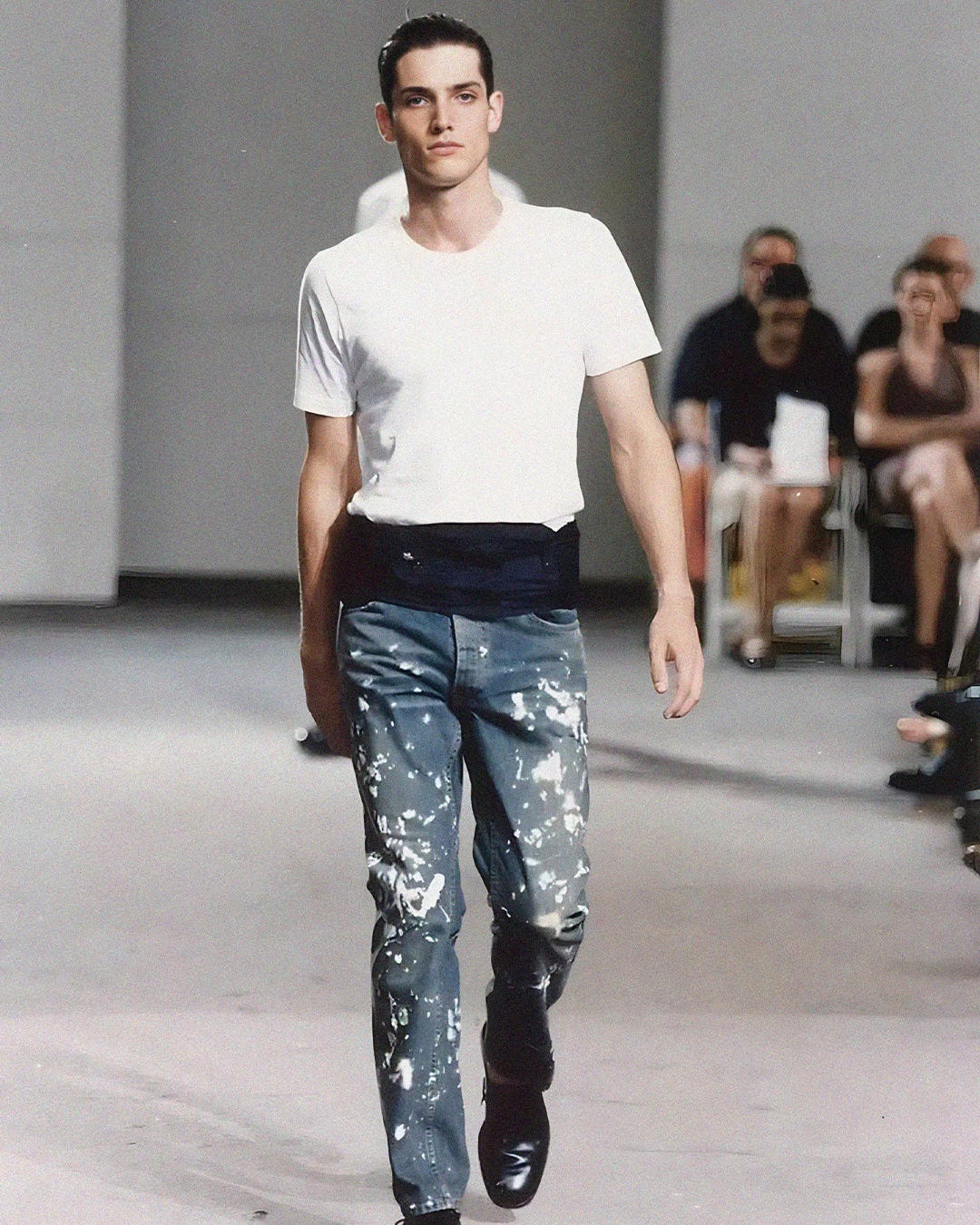
The look resonated. Junya Watanabe was first with trailing patchwork denim coats in his Fall/Winter 1992 collection. Gaultier, with whom Margiela worked from 1984 to 1987, followed with pieces made from vintage denim in his now famous “Tattoo” collection of Spring/Summer 1994 (a pair of upside down jeans reworked into cropped bolero being particularly striking). No such deconstructionist impulses at Helmut Lang, however. Just a pair of washed blue jeans dabbed with white paint in his men’s Spring/Summer 1998 collection, a look undoubtedly inspired by the newly rich art stars roaming the streets of Soho circa 1984
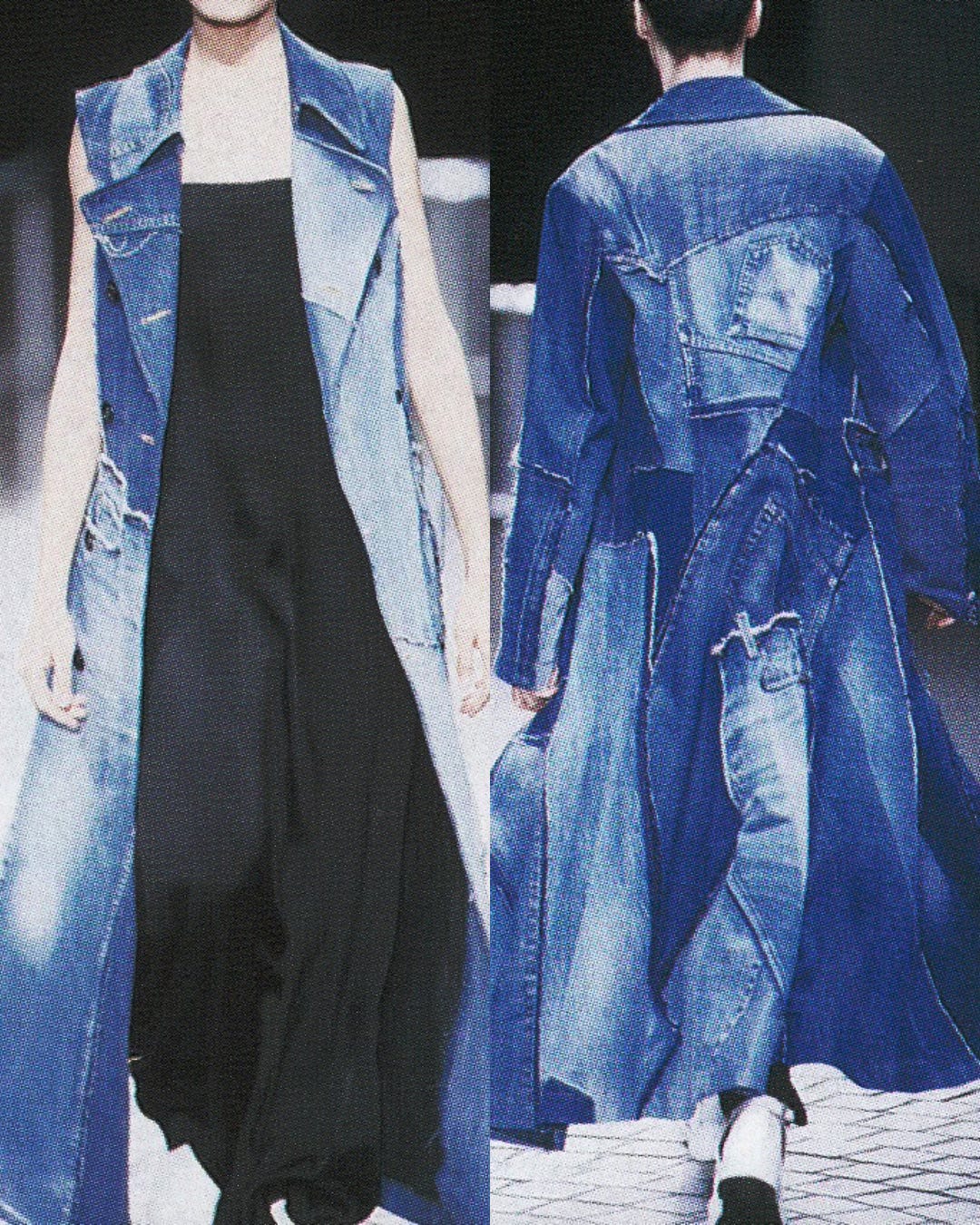
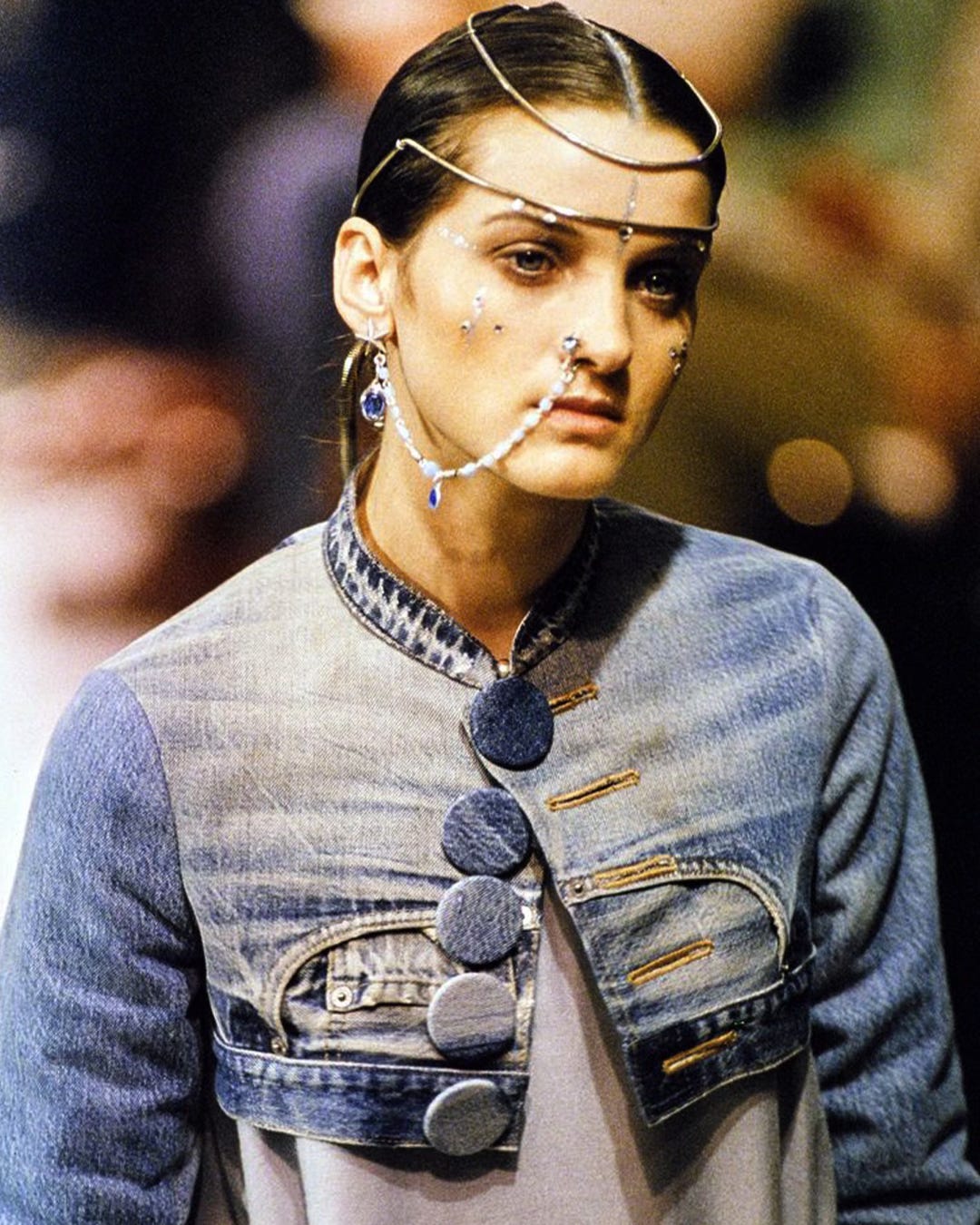
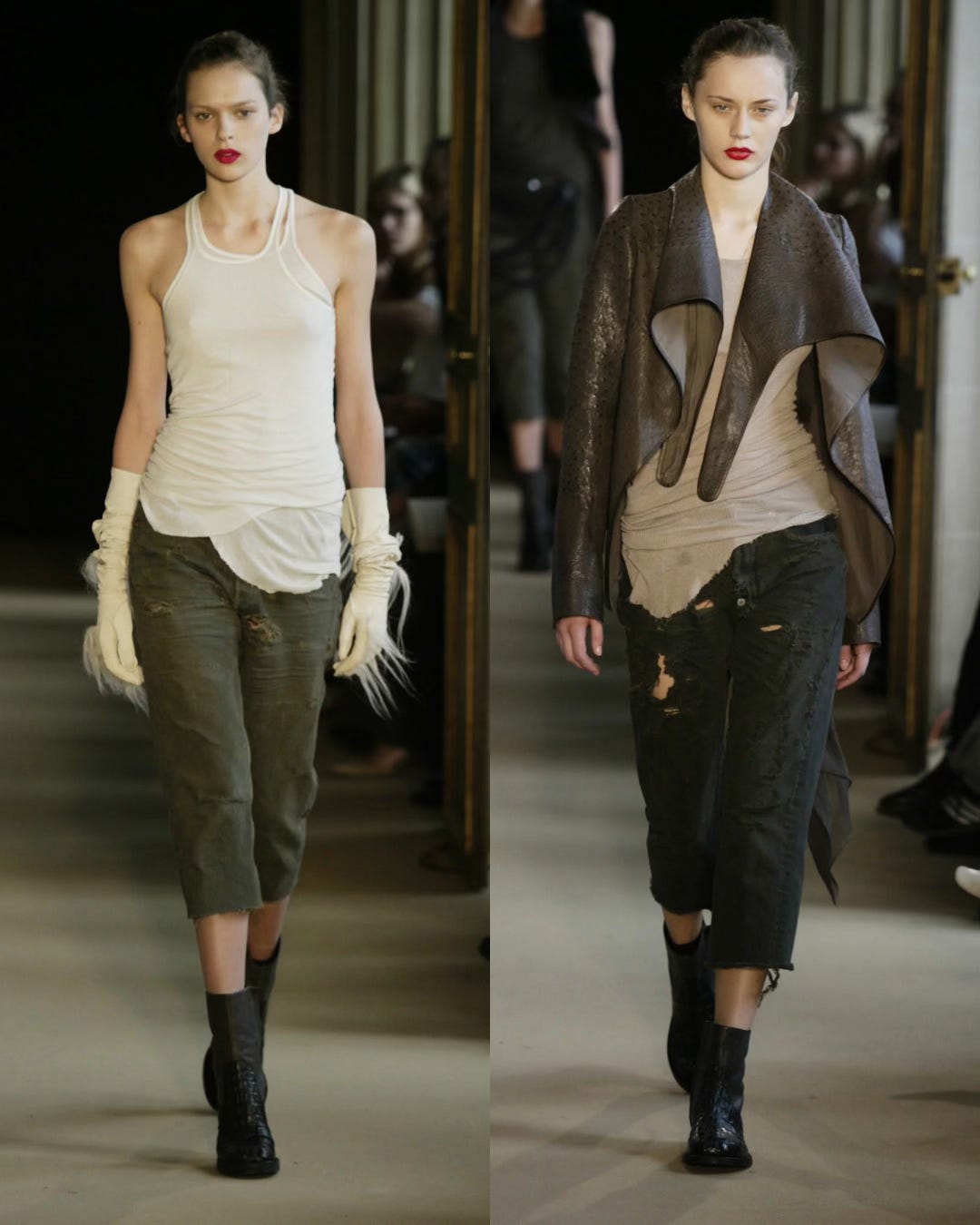
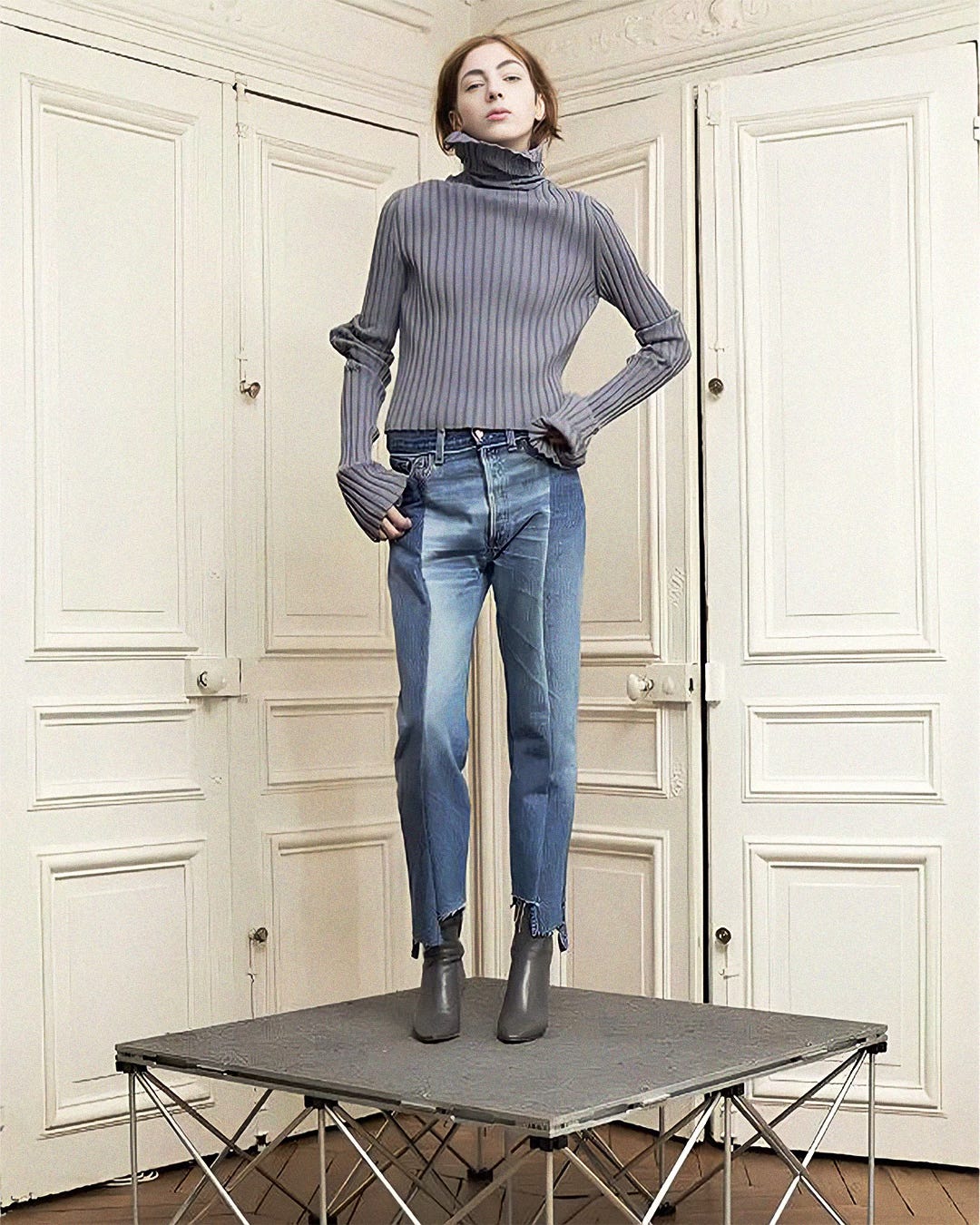
The vogue for artisanal denim on the runway cooled in the early 2000s, with Rick Owens trashed jeans at Revillon (F/W 2003) and Hannah MacGibbon’s reworked pieces at Chloé (S/S 2010) being exceptions. Stylists were undeterred, with old denim sourced from thrift stores and vintage showrooms showing up in their editorials. But it was Vetements, the design collective whose resumes included stints at Maison Margiela, who reignited fashion’s interest in upcycled denim. Their reassembled jeans from Fall/Winter 2014, with their down and dirty jagged hems, sparked a trend all the way to Givenchy on Avenue Montaigne. With old denim relatively easy to source, brands both big and small often explore its fabrication potential. At Marine Serre, where upcycling is at the heart of the brand, old denim (off cuts, pre-worn, dead stock, etc.) are in nearly every collection. CDLM, TRE Natalie Ratabesi, and SC103 reworked garments show an impressive diversification of styles. And Coach’s recent Spring/Summer 2026 collection featured a floor length coat in two-tone black denim, a style imbued with the patchouli scented spirit of Margiela’s original all those years ago.
 | A guest post by
|