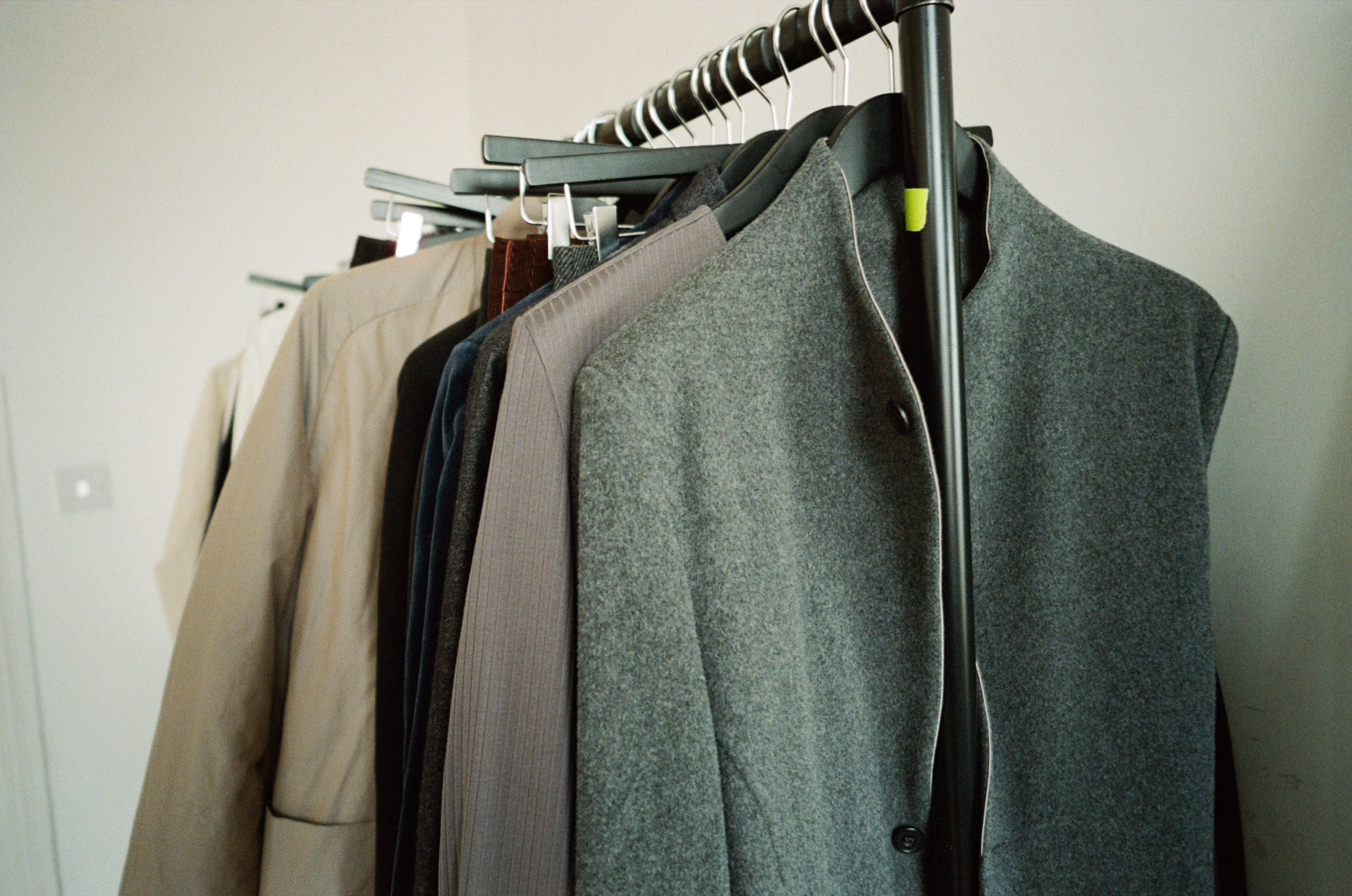
DERRICK: Elegance Under Pressure
Luke Derrick spoke with ARCHIVE.pdf about preserving the discipline of British tailoring while loosening its constraints, moving with the rhythms and contradictions of contemporary London

London keeps bodies in motion. Rushing up and down escalators; jumping from bus to Underground; shedding layers in the heat of the Tube and pulling them back on when evening cools the streets. Finding the right clothing to hurry through these shifts of space and temperature with ease and grace is no small task, and it sits at the centre of Luke Derrick’s work. The London-based designer, and LVMH Prize semi-finalist, founded his eponymous label around the idea of “Elegance Under Pressure.” In his hands, tailoring becomes less rigid and more responsive to the movement of everyday life.
The pressure comes not only from the city’s density but also from its unspoken dress codes. During COVID, just after graduating from Central Saint Martins, Luke began to question why he should wear a suit while sitting alone in his bedroom in a shirt and tie. “There was no reason to feel uncomfortable and look good for someone who wasn’t there,” he says. Luke began to rethink men's clothing and its association with bodily containment. Men's suits restrict movement; military and work uniforms are designed for specific functions; sportswear, such as hoodies, allows the wearer to conceal identity and body shape. Derrick’s work occupies the space between these codes.
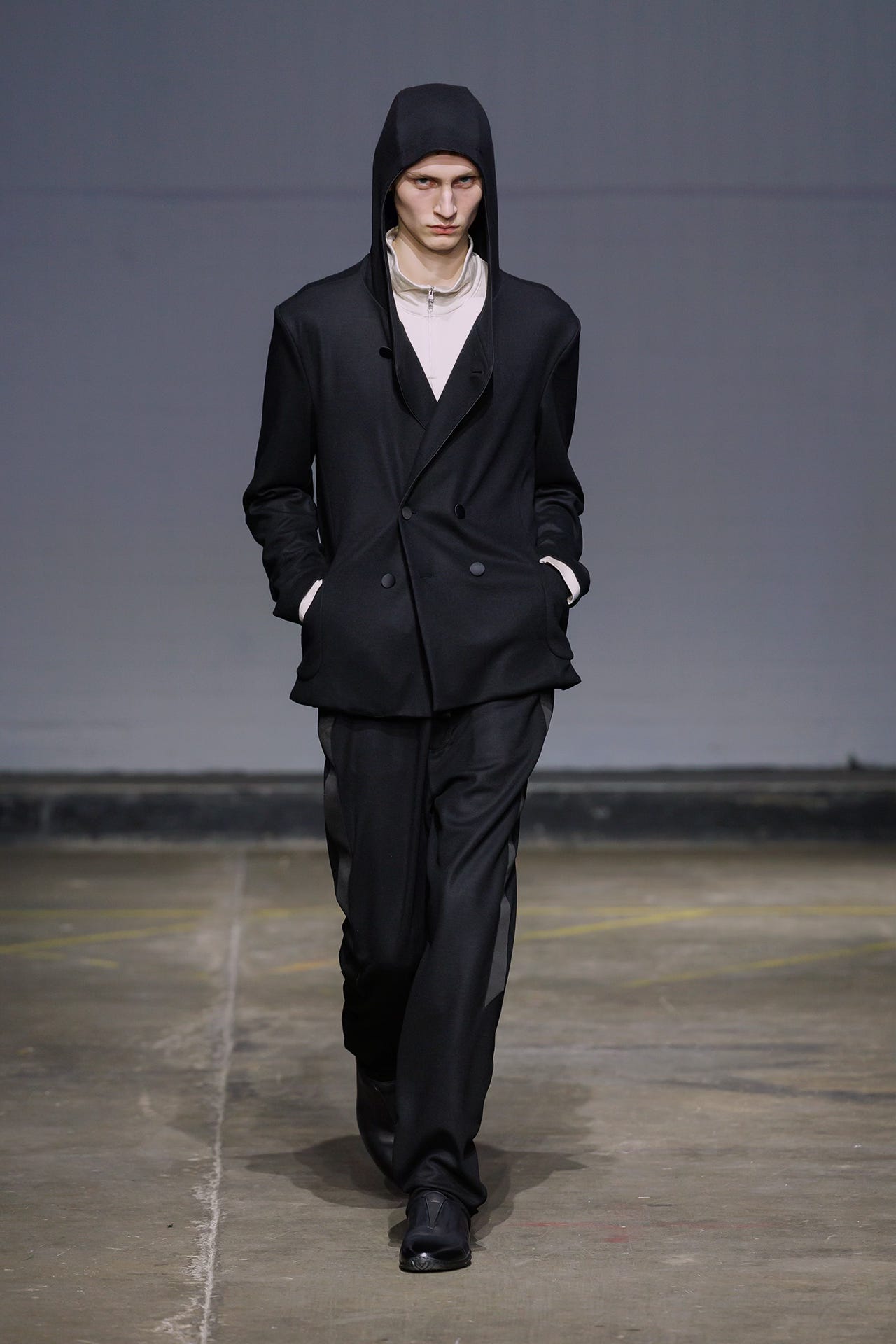
His hidden hoodie pockets in tailored soft wool jackets allow the wearer to slide his hands inside as he would in sportswear. The posture shifts: shoulders drop, the spine loosens. One appears composed while the body remains at ease — running errands across the city, squeezing through crowds, and later stopping for a drink at a bar. Functionality in Derrick’s clothing is often discreet. Coat pockets are lined with Selvyt, the cloth used by the Royal Navy to polish silver. Positioned where a phone or watch would sit, the fabric cleans these objects as they move through the pocket during the day. “Everything is designed to be as thoughtless as possible,” Derrick says. That thoughtlessness is its own form of luxury: the ability to look good without thinking about it.
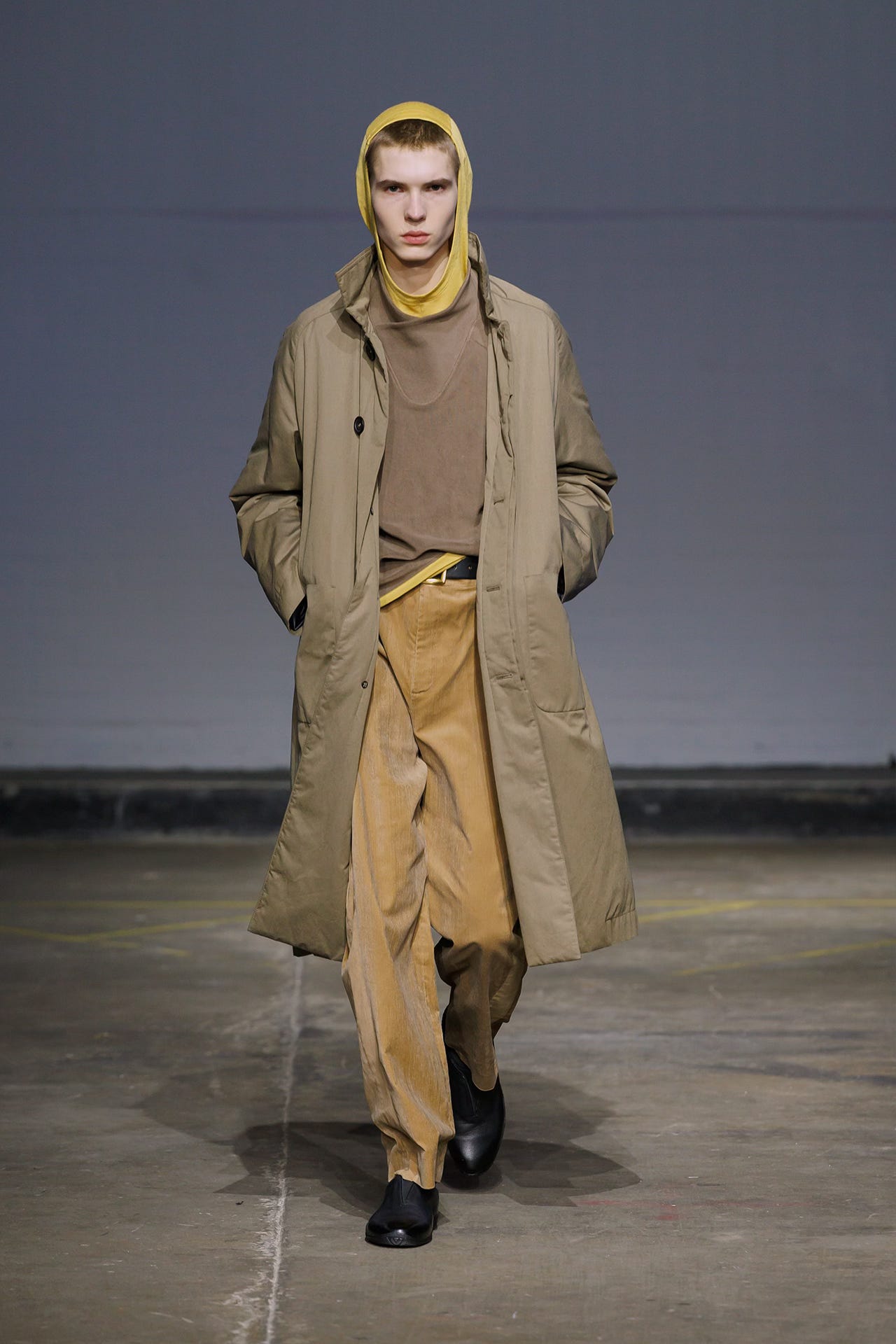
The same logic extends to outerwear that visually recalls heavy military coats yet feels unexpectedly light, filled with compressed duck feathers. The silhouette appears armoured; the experience of wearing it is soft, almost weightless. Making things appear more rigid than they feel runs throughout his work. Elegance, after all, is a matter of graceful movement. It lives in transitional moments.
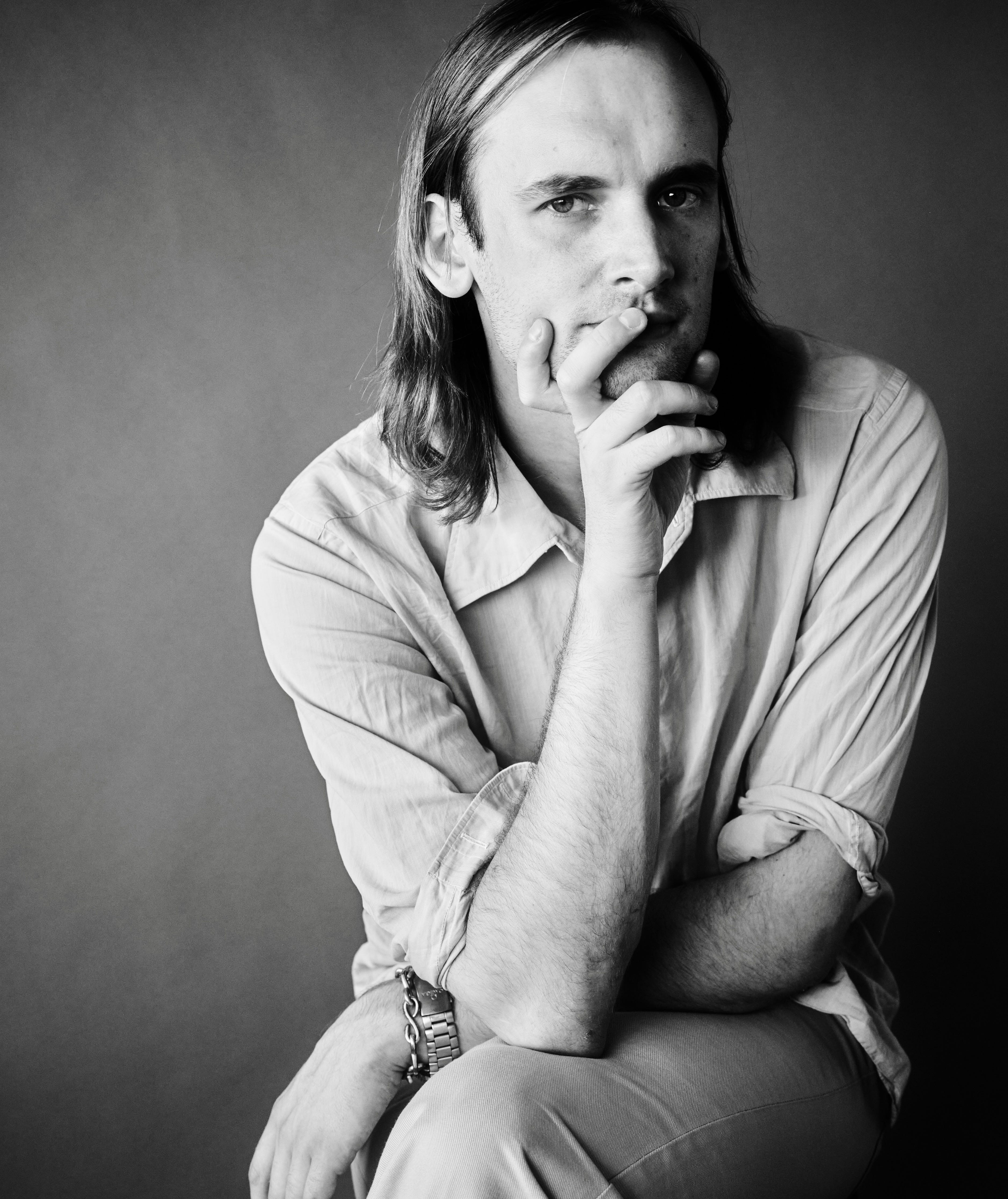
Military culture and sport shaped Derrick’s early understanding of menswear. Raised in Oxford, very tall and, by his own description, somewhat clumsy, he jokes that had he not gone to Central Saint Martins, he might have ended up at the Royal Military Academy Sandhurst. Though he had no desire to become a soldier, military culture loomed large in those school years, where identity was often declared through sport. He joined the rowing team, and it was there that his sensitivity to menswear began to surface. “There was this super nuanced aesthetic,” he recalls, “of wearing extremely high-performance and really low-performance gear.” Athletes might pair an elite German training kit with something as casual as a Five Guys baseball cap — a mix of discipline and nonchalance that would later echo in his design language. As a teenager, he began designing rowing kits for his team. An internship followed at sixteen after the cycling brand Rapha crossed his path. At that time, menswear came first; “fashion” as a term felt distant, even intimidating. Trained later on Savile Row, he learned the discipline of British tailoring.
Today, Luke and his assistant, Kosuke Otani, work in a small studio in the Bethnal Green area, a buzzy neighbourhood with food and clothing markets, where Victorian houses stand next to industrial warehouses and Middle Eastern communities coexist with young creatives. When you enter the studio, the first thing that catches your eye is a wall of street-style photographs of local people whose outfits combine traditional garments with sportswear, for example, a white jellaba paired with bright trainers.
“The old and the new are everywhere,” he says. “How can you not use that for creative purposes?” The neighbourhood and the people around him inspire Luke every day and generate many ideas, but the resources are tight. Working with limited fabric stock, where a mistake carries real financial consequences, demands trust in intuition, imagining how a small fabric swatch might behave at the scale of a finished garment. Yet those very constraints encourage refinement and demand a more rigorous approach. Building a brand in London also makes traditional British manufacturing part of the process of reimagining menswear. Derrick’s recent partnership with Private White V.C., one of the few remaining menswear factories in the UK, shows how heritage production can be integrated into a contemporary design practice.
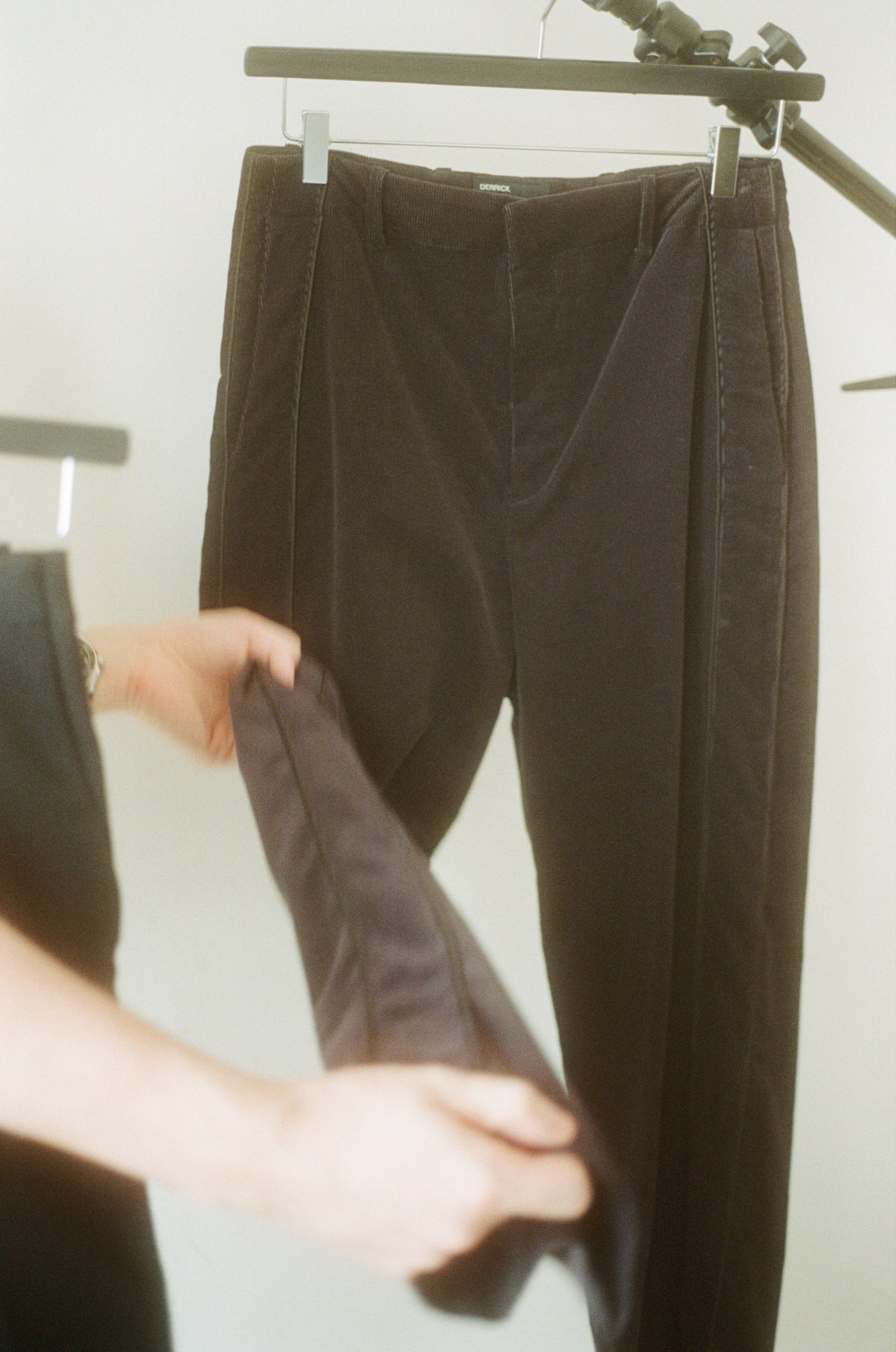
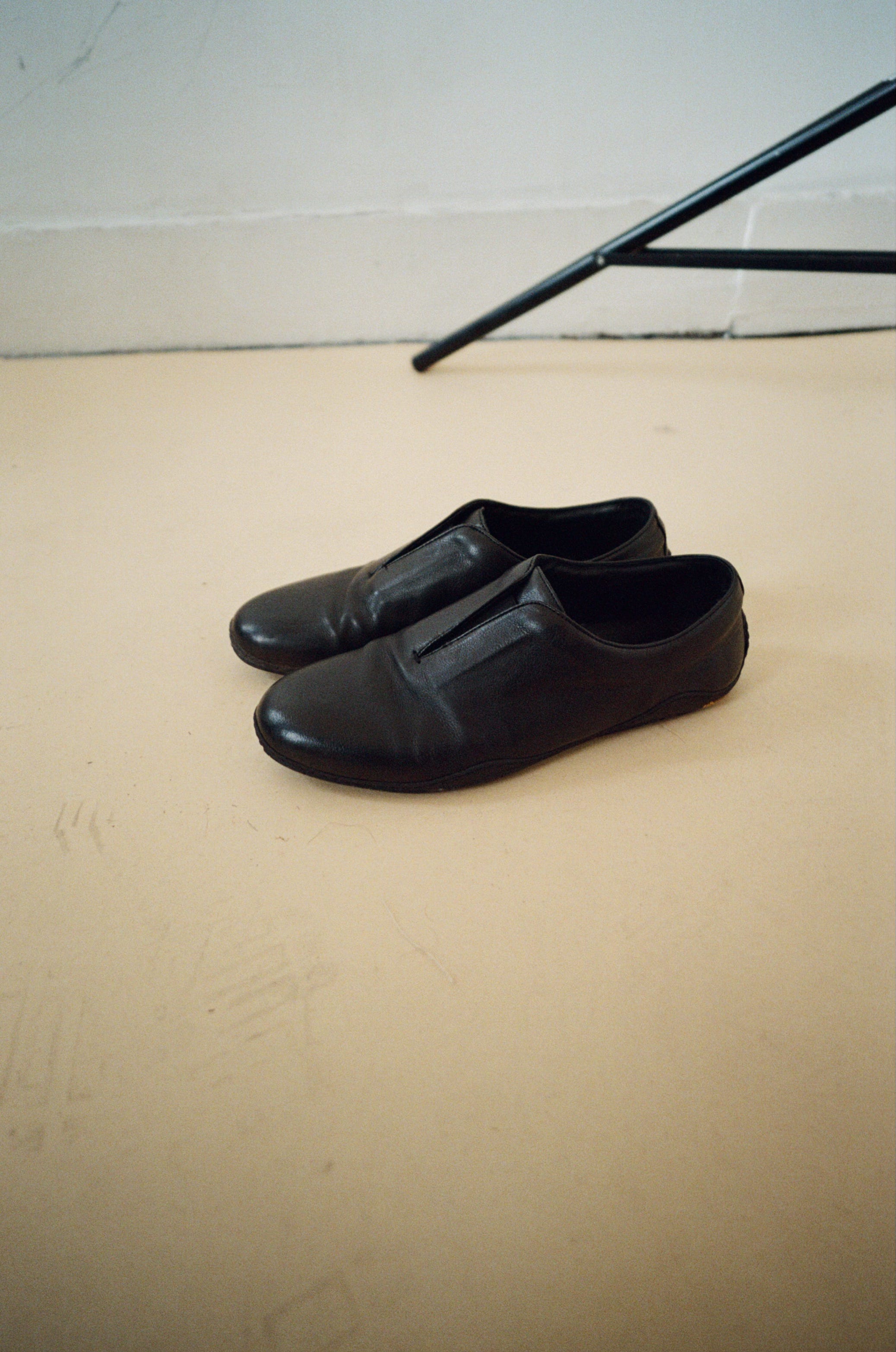
In his latest collection, Luke reworks classic shapes with elements of sportswear. Corduroy trousers feature a thin side stripe, while the shoes borrow the lines of traditional Italian footwear but are built on Vibram soles, making them as comfortable as trainers. The funnel-shaped scarf protects, recalling the familiar sensation of pulling on a turtleneck: fabric sliding softly over the neck and cheeks, leaving you both hidden and exposed. These ambivalent pieces are ideal for people living in big cities, where the immensity of time and space can feel overwhelming, and where it is easy to get lost and be vulnerable. “I think we’re living in a strange time,” says Luke. “Everyone is insecure. The world feels like it’s in flux.”
Luke’s clothing considers how one might want to physically feel a connection with the surrounding space: to dissolve into it in a sense, while still knowing that one is safe and protected. It’s felt in the pleasant sensation of fabric on the skin as the wind blows, or in the observation of reflections moving across the surface of a jacket. In a recent collection, iridescent fabric captures London under shifting light. They feel particularly suited to twilight: that suspended hour between the end of work and the beginning of night, when the city exhales before gathering itself again. London demands a great deal, both physically and mentally. And if Derrick’s clothes function as armour, they do so gently: with structure, elegance, and care.
- Sofia Anna Dolin, Writer ARCHIVE.pdf