
By Ligia Ponce
Mass production in fashion didn’t happen overnight. It took decades to build. Once it arrived, it rewired our relationship to clothing almost instantly. We moved from garments made for bodies to garments made for systems. Overproduction and disposability followed. Some resisted, others surrendered, but resistance was never going to win against speed and scale.
And as with everything, the moment something becomes dominant, its opposite begins to form. In response to fast fashion came slow production, but also something else. The need to justify.
I was taught in design school that every decision needed a reason. A why. A backstory. An explanation for the shape, the color, the material. At its best, this discipline gives structure. At its worst, it becomes a tool to disguise weak design. A way to intellectualize what doesn’t hold up on its own.
That is where things begin to blur.
In our attempt to counter the emptiness of overproduction—not just in fashion, but in life—we began to overcorrect. We started to conceptualize everything: the products we consume as extensions of the identities we want to project, and in turn, as signals of the belonging we seek. What we buy is no longer just about the result, but about what it says, what it aligns us with, and who it places us next to.
Are you team Rhode or team Rare? Do you belong to the Rick Owens universe, or are you part of the Miu Miu crowd? And what does that actually say about you, beyond whether you like the product?
Ours is a culture obsessed with curation, and in doing so, we seem to have lost the ability to separate the story from the thing itself. The narrative begins to outweigh the garment; words start to eclipse quality, durability, even wearability.
We have gone so deep into ecosystems, missions, and storytelling that the object itself becomes secondary. Not always, but often enough to notice. We do not need more clothes, more brands, more products. And yet, attach the right story to something, and suddenly it feels necessary.
A meme I came across captured this perfectly. It mapped how people think about fashion in levels. At the entry point, clothes should be wearable. As you go deeper, they become art, concept, statement. And at the highest level, you return to the beginning. Clothes should be wearable.
This mirrors another idea. The more you know about fashion, the “worse” you dress. At first, you don’t know the rules, so you wear whatever you want. Then you learn everything. Color theory, construction, references, history. You analyze, refine, control. And eventually, you circle back. Except now, freedom comes from knowledge, not ignorance. To break the rules, you have to understand them.
It is easy to see how intention became so important. If everything has already been done, or feels like it has, then meaning becomes the differentiator: What inspires the piece; What justifies its existence.
“This emphasis on process over product, or perhaps more accurately, on process as product, is justified on the straightforward basis of inverting capitalism’s predilection for the contrary.” — Claire Bishop, Artificial Hells: Participatory Art and the Politics of Spectatorship (2012)
The logic holds. Until it doesn’t.
When we invest time, effort, or pain into something, we need to believe it was worth it. Otherwise, we experience discomfort. Process becomes value. The time it took. The difficulty. The access. This is why certain luxury systems work. Not just because of the object, but because of the path required to obtain it. The product becomes proof of endurance.
Process embeds itself into desire.
We see this most clearly in couture, which is perhaps the only reason the ongoing debate of whether fashion is art even exists. Couture operates as the epitome of everything that inhabits the fashion sphere, or even, arguably, the world itself. In order to justify the absurd price point of a single garment—one that makes luxury ready-to-wear feel almost negligible—you must construct an airtight, elevated atmosphere around it. In this sense, couture becomes the ultimate expression of storytelling through fabric.
Even the term itself is deliberately inaccessible, reinforcing the idea of effort, exclusivity, and discipline as part of the reward. For something to be considered haute couture, it must adhere to strict criteria set by the Fédération de la Haute Couture et de la Mode: the house must be based in Paris, maintain a dedicated atelier with a minimum number of full-time artisans, produce made-to-measure garments for private clients with multiple fittings, and present two collections per year during the official couture calendar. As of now, there are only around sixteen to eighteen houses that meet these standards.
To operate within this system, you must also understand and mobilize references—historical, cultural, and artistic—which are then translated into intricate, often dreamlike garments. Matthieu Blazy’s first haute couture show for Chanel leaned into this, presenting an unusually strong focus on daywear. The collection drew from a poem, and from the very principle that founded the house: to create clothes for women to live in—“to go to work, to go to a play, the cinema, whatever.”
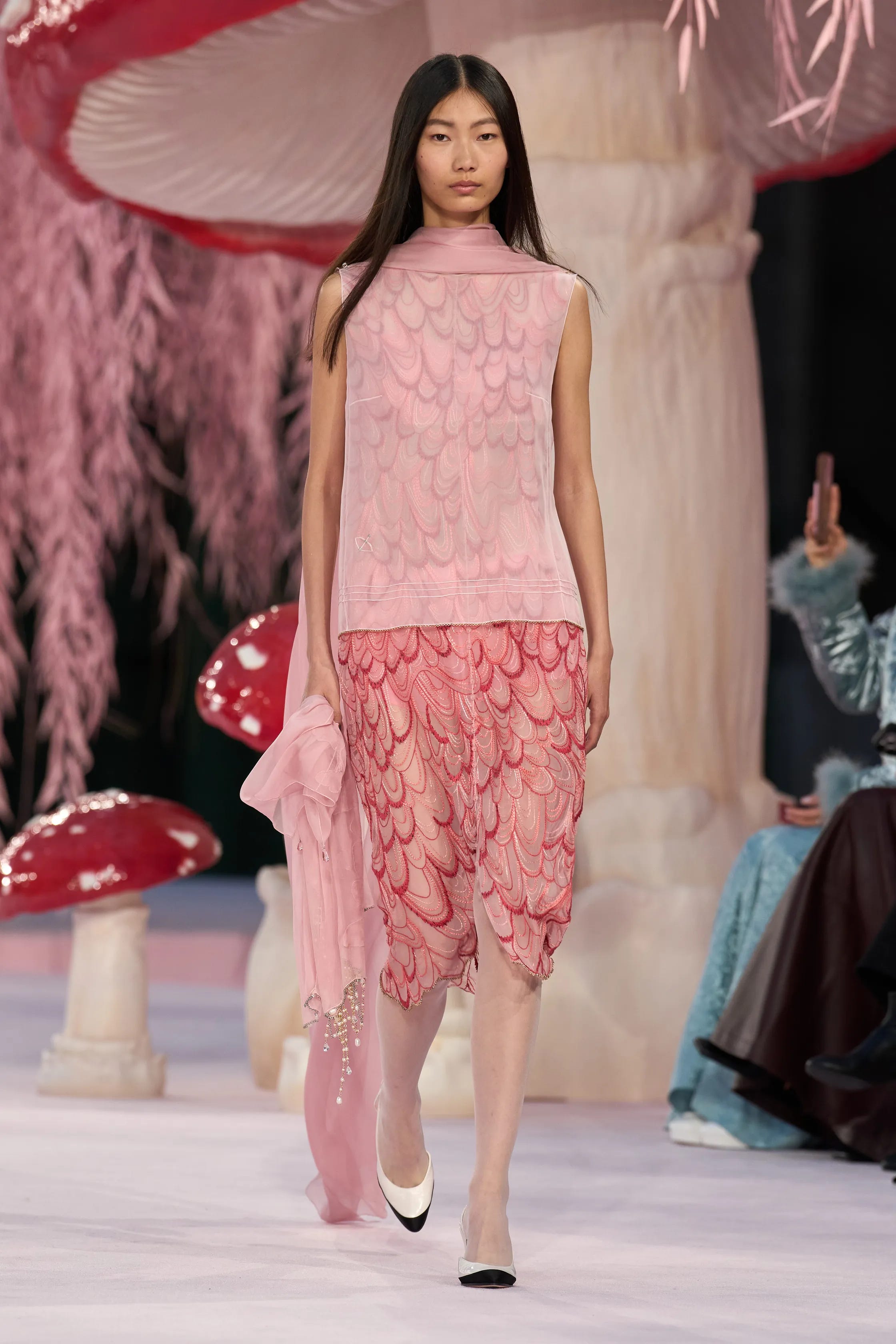
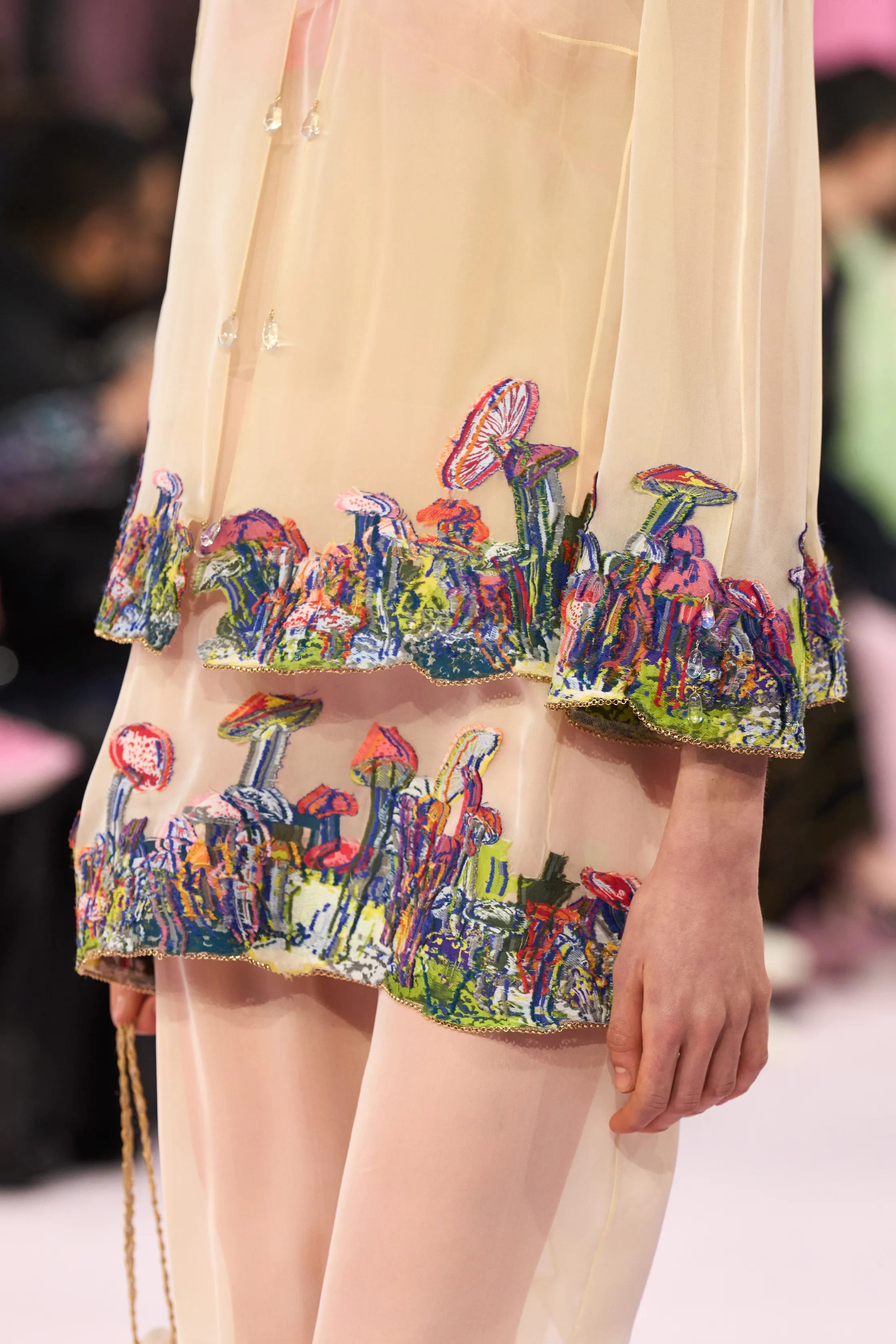
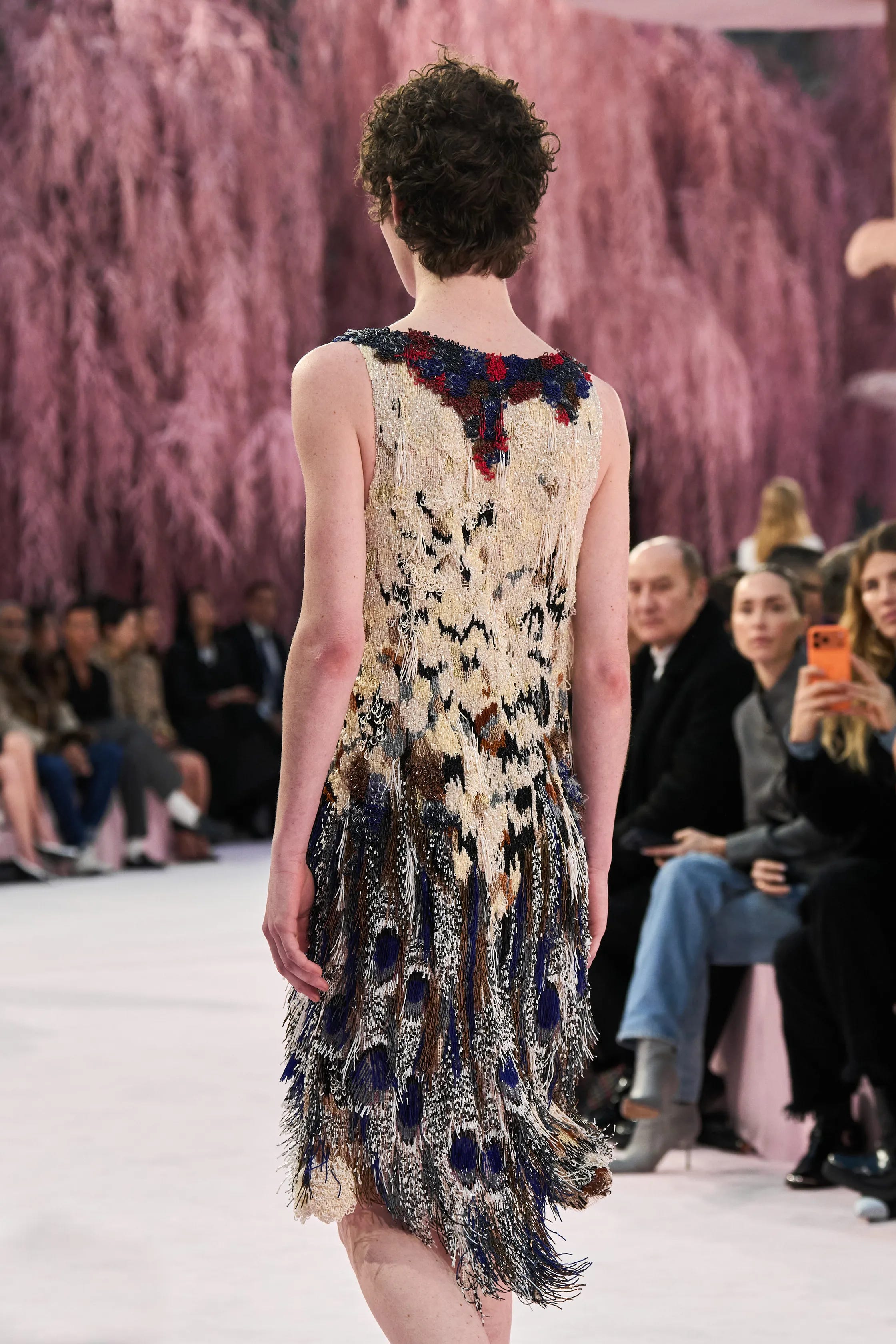
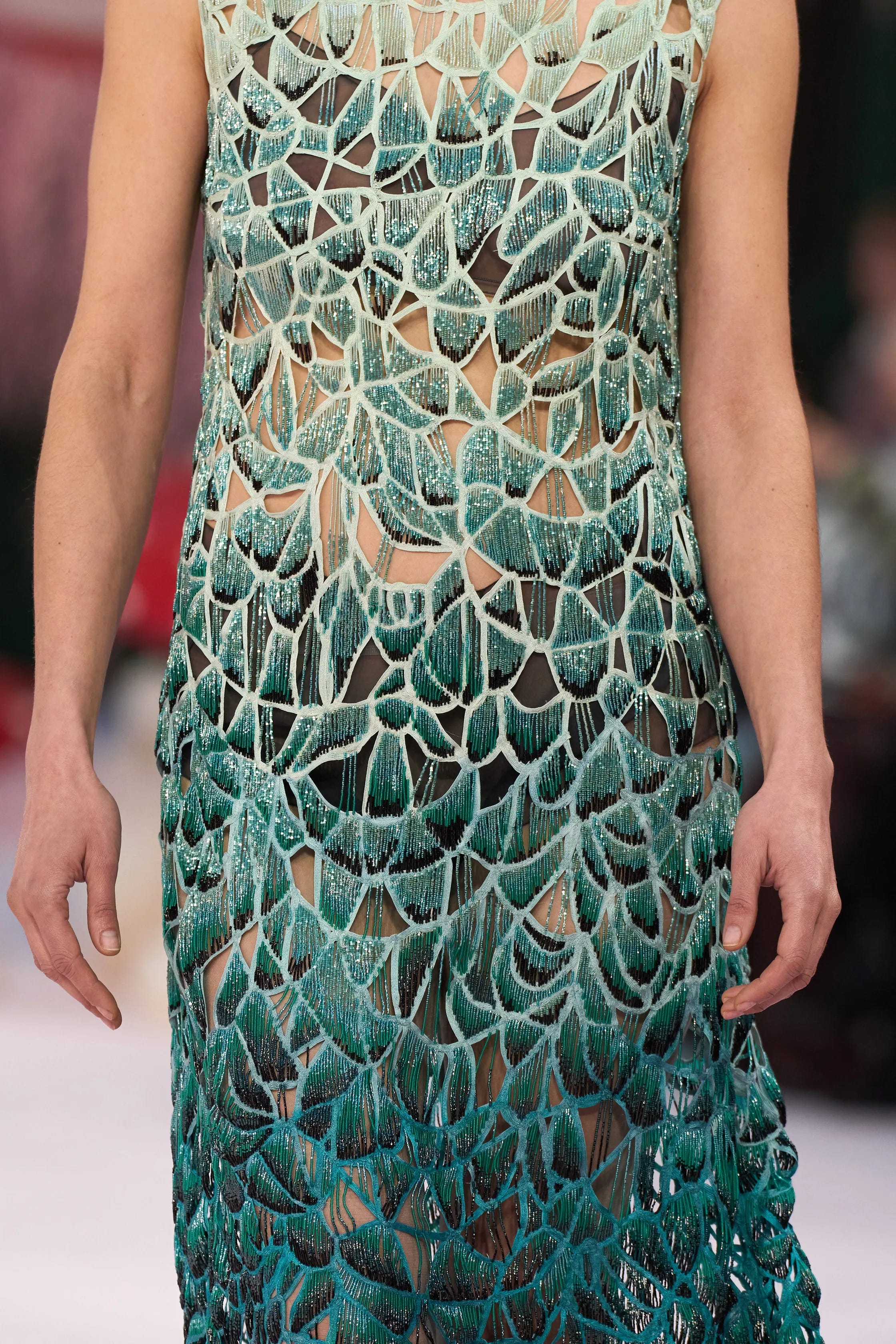
Blazy described the starting point as an accidental haiku about a bird and a mushroom. “I thought it was so beautiful, so short, and I was wondering, can I tell a story with those three lines?” he said. And unsurprisingly, he did. The story becomes inseparable from the garment, and when executed well, it is powerful. It elevates the object beyond itself.
But this is also where the tension begins.
Couture is often positioned as the point where fashion becomes art, where function is not only secondary but sometimes intentionally discarded. And when intention itself becomes the product, it becomes easier to manipulate. Like anything overused, it begins to lose weight. Meaning turns into a shield: a way to justify what is otherwise unremarkable. A simple T-shirt upheld not by cut, fabric, or construction, but by a paragraph explaining why it matters.
So what are we actually being sold? Not couture itself, but the machinery of luxury that surrounds it. By now, we understand that price does not necessarily reflect fair wages—not for internal teams, and certainly not for external manufacturing or material sourcing.
Consumers are increasingly turning to vintage, not out of nostalgia, but out of logic. Better quality. More honest pricing. Garments that have already proven their longevity. And in many cases, a form of real scarcity—not one manufactured through marketing.
The narrative bubble is starting to crack. But the issue is not meaning itself. It is excess. Meaning stretched past its limit, until it no longer holds. Clothes can carry intention. They should. But intention cannot replace construction. At some point, this stops being about meaning and starts resembling something closer to jouissance. The inability to stop. Producing and justifying, even when the object no longer sustains it.
The question is no longer what something means, but whether it can exist without explanation.