What Happens When a Designer Reflects?
Rick Owens S/S '26 TEMPLE continued the celebration of Owens' 30-year career that began with the Palais Galliera's Temple of Love retrospective exhibition.


Rick Owens is celebrating. The Spring/Summer 2026 season coincided with the opening of Temple of Love, the retrospective of the designer’s thirty-plus years of design at Palais Galliera. The exhibition was the product of an intimate collaboration between Owens as artistic director and Galliera’s Alexandre Samson and Miren Arzalluz, making it one of the few retrospectives to involve a designer themself curating their own history. Owens’ S/S ‘26 collection TEMPLE commemorated the exhibition, with the men’s runway centered around a mass of scaffolding in the center of Owens’ show-home at Palais de Tokyo, the models harnessing themselves to the structure in a hybrid human-metal monument to Owens and his devoted crowd. The women’s collection opted for less construction work, with the models instead baptizing themselves in a pool flooding the center of the same venue, their draped skirts soaked with water as they climbed back up the Palais steps.
But amid all of these gestures of celebration, what is most striking about TEMPLE is the way in which Owens’ reflection through the exhibition manifests in the clothes. Owens has always been a self-referential designer, iterating on concepts season after season or across decades. This autobiographical look towards the past has been particularly concentrated in his 2020s work, with TEMPLE following a series of collections titled after the cities that shaped Owens’ life: PORTERVILLE, HOLLYWOOD, and CONCORDIANS. Still, this particular moment of reflection has unearthed some deeper-cuts from Owens’ oeuvre, like his work from the 1990s that has gone largely undocumented until Temple of Love. Clearly, some of those previous ideas have infiltrated Owens’ contemporary designs.
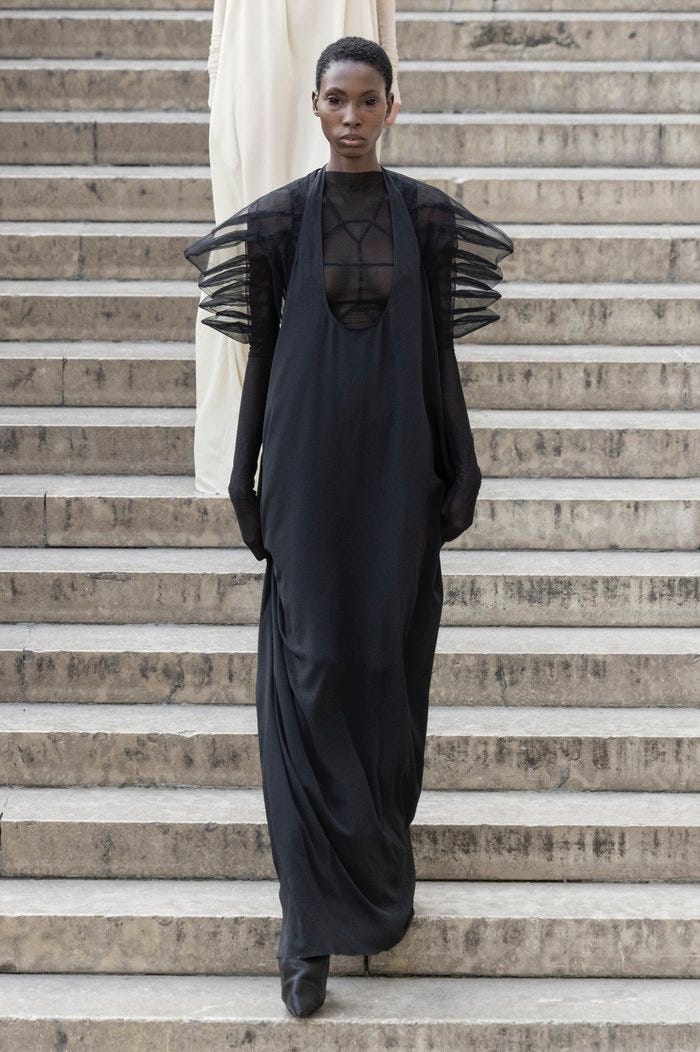
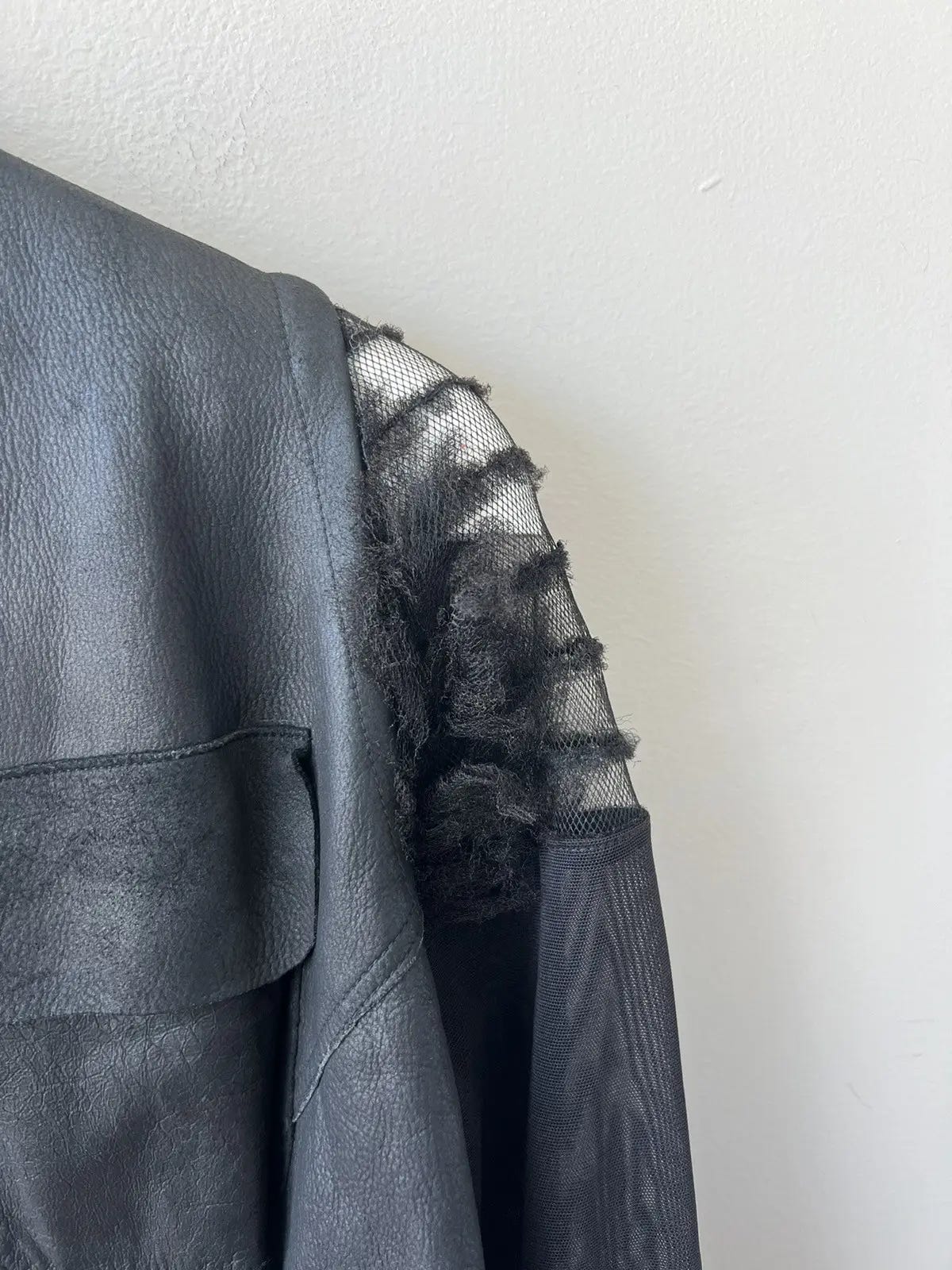
Take, for example, the tulle shoulder decorations from the second half of the collection, sheer fabric built into a series of structured striations down the models’ upper arms. This kind of shoulder exaggeration has been core to Owens’ past few runways – but its roots go all the way back to the 1990s, with Owens reworking the cheap mesh he could find into a less structured version of the same shape.
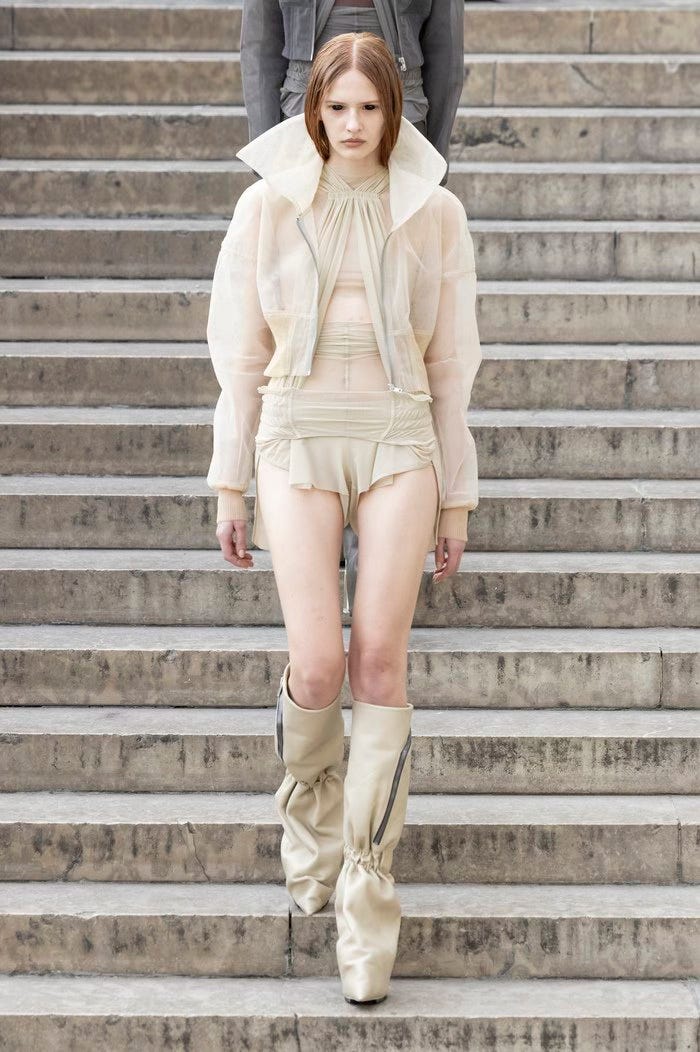
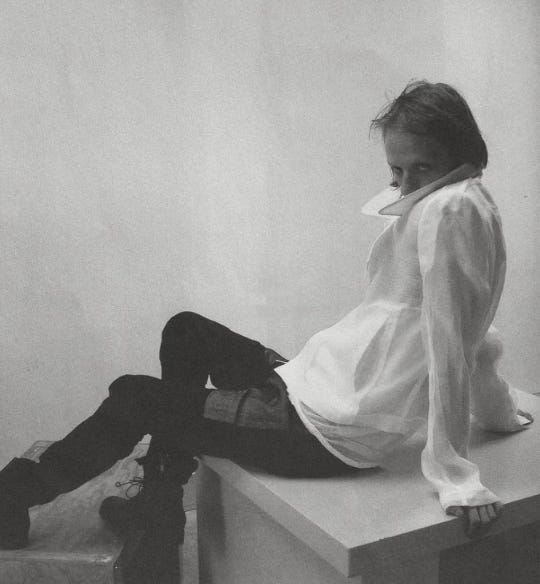
There was also a series of sheer jackets, featuring the “Dracucollar” from Fall/Winter 2025’s CONCORDIANS, which recalled the signature motif of Owens’ S/S ‘07 DRAKE, with this iteration reflecting Owens’ current silhouette, with a high crop and an exaggerated shoulder.
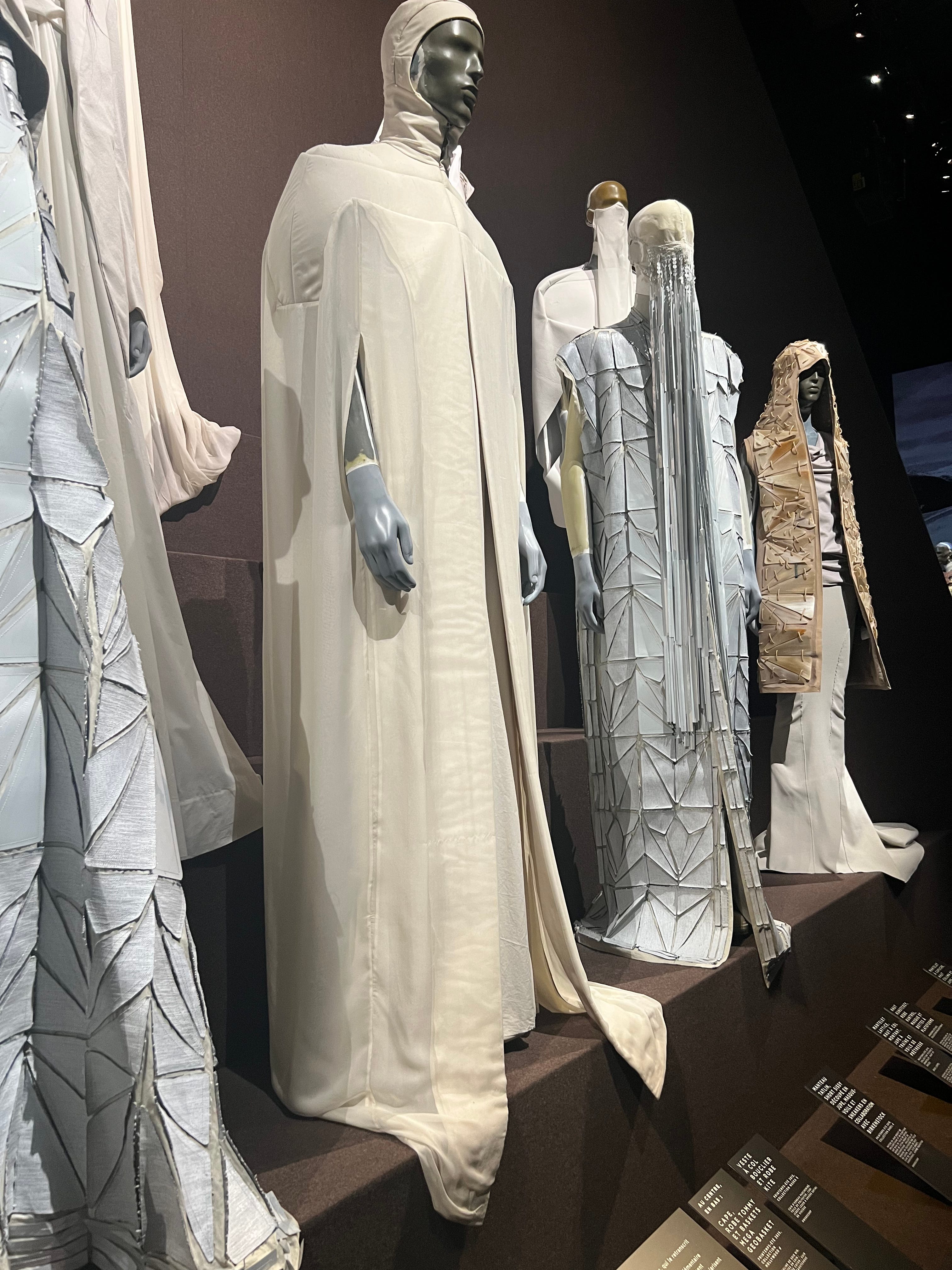
The collection also featured Owens’ latest take on sequins. The entrance to the retrospective proudly displays three takes in sequence, from F/W ‘10 GLEAM (horn triangles tethered to the fabric with leather cord) , S/S ‘19 BABEL (cotton and polyester high-shine “megasequin” polygons stitched to the fabric), and F/W ‘24 PORTERVILLE (sequinned webbed dresses). For TEMPLE, Owens presented his “truest” sequins of the bunch, studding dresses and heels, signifying his increasing embrace of unfettered glamour. The look which immediately followed those dresses, cutoff denim shorts with a zipped leather jacket, recalled SLAB, his first diffusion line, and its washed-out take on Los Angeles sleaze.
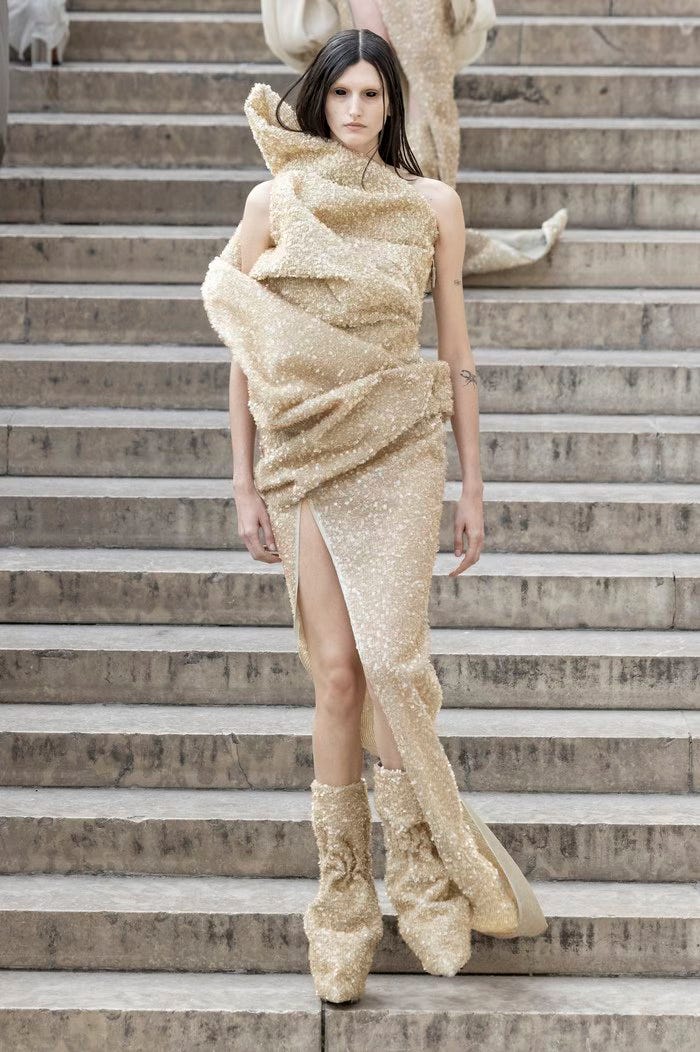
All of these ideas have their roots in Owens’ past – but here we see them unrestrained and unashamed. Owens, written into the ivory tower of fashion history by Palais Galliera, can explore these ideas with as much grandiosity as he desires, because this season there is a wax statue in his likeness pissing into a pool in one of the most important fashion museums in the world.
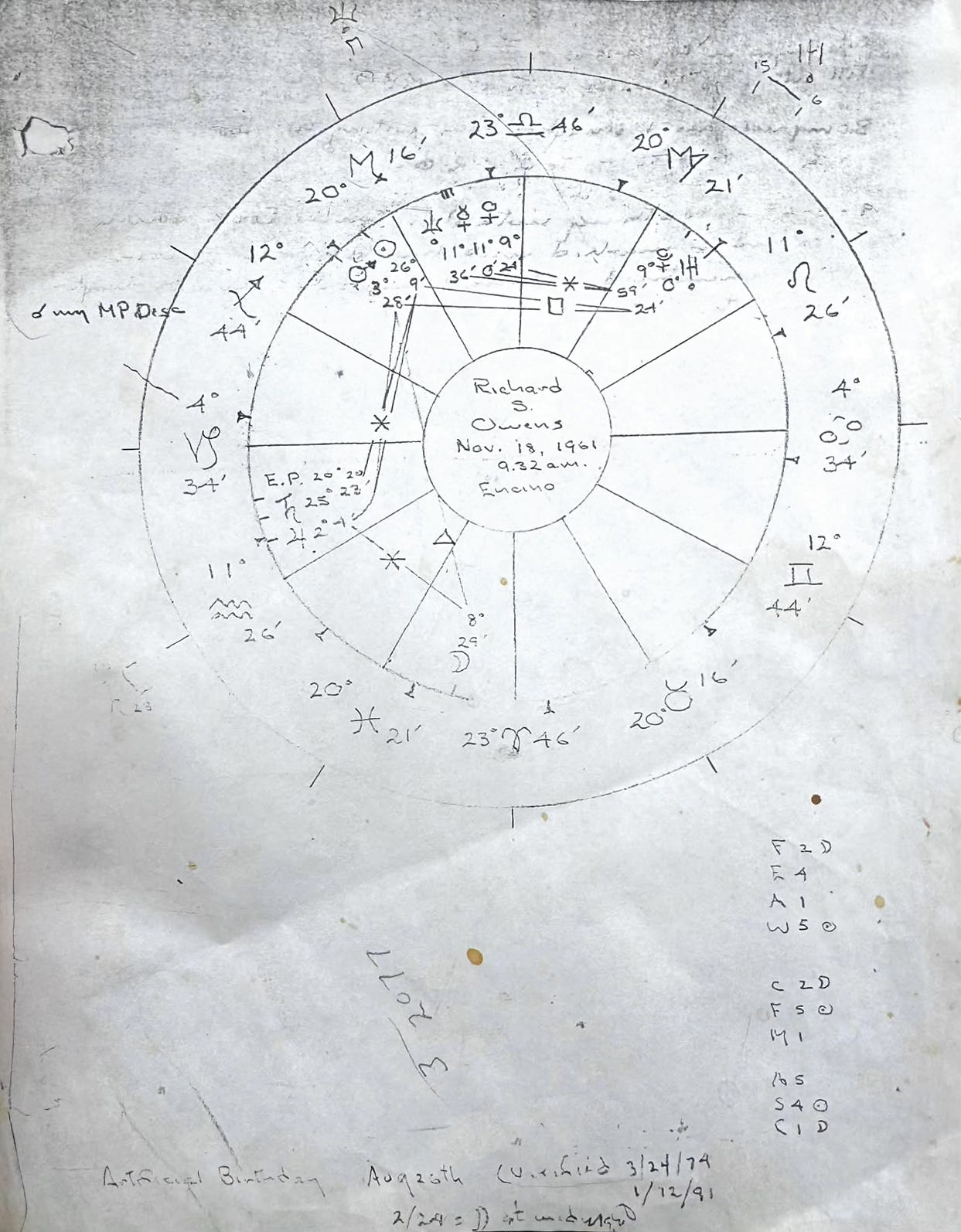
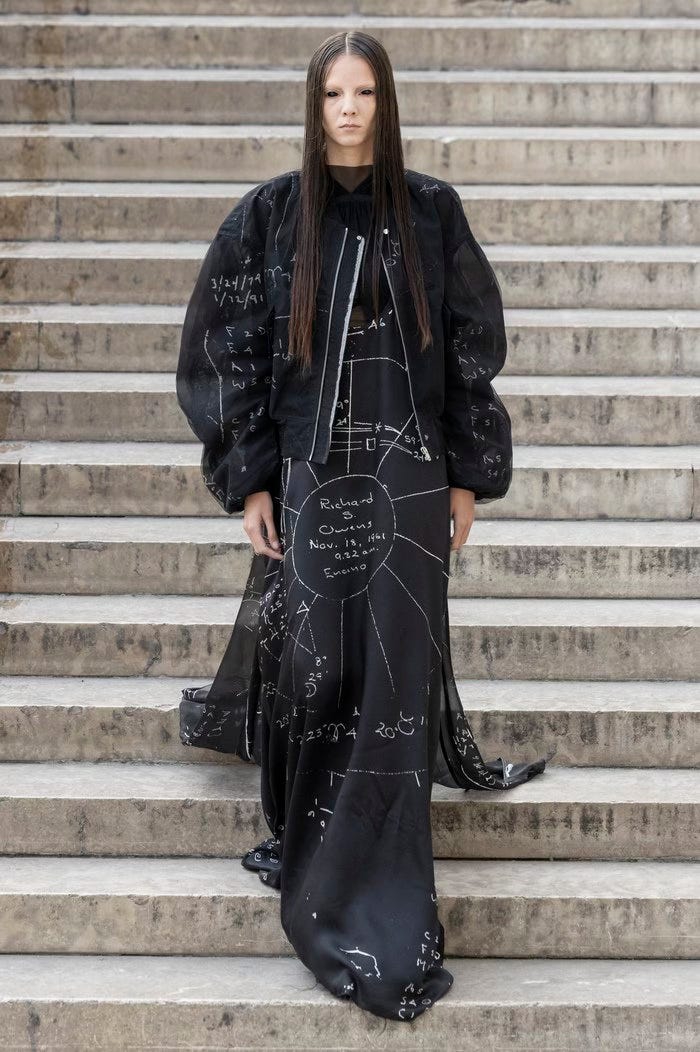
The runway concluded with two looks, all-white and all-black, each printed with a scan of a drawing of Richard Saturnino Owens’ birth chart, hand-drawn by his father. This was a celebration of an entire tribe, a decades-long aesthetic development that touched many fans across many countries, but with one man in the center.
I think that “experimentation” in fashion has gotten to the point of simply replicating others experiments instead of questioning why and how we ought to wear clothes… I wish designers cared about how clothes actually fit on bodies, instead of random concepts of things to create the illusion of being artsy… maybe that’s why the influencers are in the front rows of fashion shows… they are the only ones who still think it’s cool and interesting to go to them…